Pendekatan STEAM Berbasis Proyek dalam Pengembangan Kognitif dan Kreativitas Anak Usia Dini
DOI:
https://doi.org/10.30587/jieec.v8i2.11715Keywords:
STEAM,Project-Based Learning, Cognitive Development, Creativity, Early Childhood.Abstract
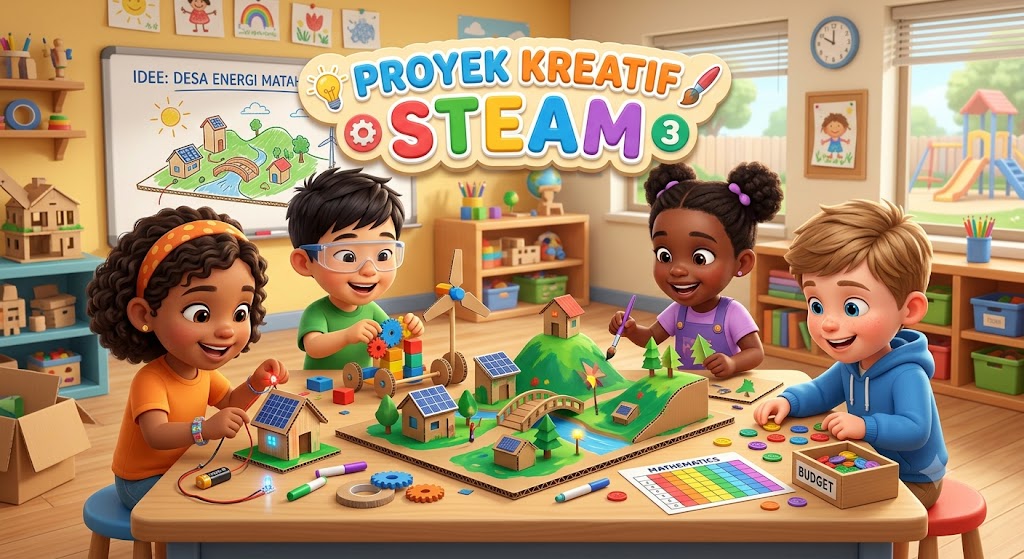
This study aims to analyze the implementation of the Science, Technology, Engineering, Art, and Mathematics (STEAM) project-based approach in fostering cognitive development and creativity among early childhood learners. This study employed a descriptive qualitative literature review method. Data were collected from national and international journal articles, conference proceedings, and scholarly books published between 2019 and 2026 that were relevant to the research topic. The data were analyzed using content analysis through the stages of data reduction, data presentation, synthesis of findings, and conclusion drawing. The findings indicate that project-based STEAM learning is implemented through exploration, experimentation, observation, and project activities that provide meaningful learning experiences for young children. This approach contributes positively to the development of critical thinking, problem-solving skills, creativity, communication, collaboration, and cognitive abilities. However, its implementation continues to face several challenges, including limited teacher competence in integrating STEAM components, inadequate learning facilities, and the need for continuous professional development and mentoring. This study provides a comprehensive synthesis of the implementation, benefits, and challenges of project-based STEAM as a foundation for developing innovative learning practices in early childhood education.
Downloads
References
Arianto, B. (2024). Triangulasi Metoda Penelitian Kualitatif. In Borneo Novelty Publishing. Borneo Novelty Publishing.
Ariyati, E., Susilo, H., Suwono, H., & Rohman, F. (2021). Pemberdayaan Keterampilan Berpikir Kritis Melalui Pembelajaran Process Oriented Guided Inquiry Learning (POGIL). Scholaria, 11(3), 208–215.
Bahtiar Afwan, Agung Dian Putra, Alfarisi Abbas, N., Azmi Muhammad, U., & Rijal Fadli, M. (2025). Persepsi Guru terhadap Pendekatan Deep Learning dalam Pembelajaran Sejarah di Sekolah Menengah Atas. SOCIAL PEDAGOGY: Journal of Social Science Education, 6(2), 121–130. https://doi.org/10.32332/social-pedagogy.v6i2.11519
Denny Shinta Rahmawati, Kuni Fatonah, & Elyaum Farihah. (2025). Manajemen Pengelolaan Kelas dalam Praktik Bercerita dari Buku pada Anak Usia Dini Di TK Dharma Wanita Sriwedari. JIEEC (Journal of Islamic Education for Early Childhood)., 7(2), 24–32. https://doi.org/10.30587/jieec.v7i2.10020
Fadhil, M., & Hayat, N. (2023). Implementasi Kegiatan Kolase dalam Mengembangkan Kemampuan Motorik Halus Pada Anak Usia Dini Kelompok B. Atthiflah: Journal of Early Childhood …, 10, 330–343.
Herliyana, B., & Maslahah, T. (2025). Relevansi Teori Perkembangan Piaget dan Erikson dalam Pembentukan Karakter dan Kognisi Anak di Era Digital. Jurnal Educazione : Jurnal Pendidikan, Pembelajaran Dan Bimbingan Dan Konseling, 13(1), 29–41. https://doi.org/10.56013/edu.v13i1.3739
Hidayat, A., Selina, R., & Kuswanto, K. (2025). The Subjectivity of Early Childhood on the Loss of a Father: A Phenomenology of Self-Confidence and Prophetic Character. PAUDIA: Jurnal Penelitian Dalam Bidang Pendidikan Anak Usia Dini, 14(3), 722–742. https://doi.org/10.26877/paudia.v14i3.2012
Id’ha Tutfi Ulkhatiata. (2025). Pengaruh Penggunaan Cognitive Behavioral Therapy Terhadap Peningkatan Motivasi Belajar Anak Tunalaras. JIEEC (Journal of Islamic Education for Early Childhood)., 7(2), 13–23. https://doi.org/10.30587/jieec.v7i2.10216
Irawati, L., Suryani, L., Luji, A., & Mulyanto, Y. (2023). Tinjauan Kritis Model Pembelajaran Montessori dalam Pengembangan Kemandirian Anak. JIIP - Jurnal Ilmiah Ilmu Pendidikan, 6(6), 4033–4038. https://doi.org/10.54371/jiip.v6i6.1577
Leavy, A., Dick, L., Meletiou-Mavrotheris, M., Paparistodemou, E., & Stylianou, E. (2023). The prevalence and use of emerging technologies in STEAM education: A systematic review of the literature. Journal of Computer Assisted Learning, 39(4), 1061–1082. https://doi.org/10.1111/jcal.12806
Leoste, J., Lavicza, Z., Fenyvesi, K., Tuul, M., & Õun, T. (2022). Enhancing Digital Skills of Early Childhood Teachers Through Online Science, Technology, Engineering, Art, Math Training Programs in Estonia. Frontiers in Education, 7(May), 1–10. https://doi.org/10.3389/feduc.2022.894142
Marisa, M. (2021). Inovasi Kurikulum “Merdeka Belajar” di Era Society 5.0. Santhet: (Jurnal Sejarah, Pendidiikan Dan Humaniora), 5(1), 72. https://doi.org/10.36526/js.v3i2.e-ISSN
Mauluddia, Y., & Solehuddin, M. (2023). The Application of Playing in Early Childhood Education Based on Piaget’s Way of Thinking. Al-Athfaal: Jurnal Ilmiah Pendidikan Anak Usia Dini, 6(2), 143. https://doi.org/10.24042/00202361730300
Mushab Al Umairi. (2023). Pengembangan Interaksi dan Perilaku Sosial Terhadap Pendidikan Anak Usia Dini di Abad 21. Kiddo: Jurnal Pendidikan Islam Anak Usia Dini, 4(2), 1–12. https://doi.org/10.19105/kiddo.v4i2.9705
Novitasari, Y., & Fauziddin, M. (2022). Analisis Literasi Digital Tenaga Pendidik pada Pendidikan Anak Usia Dini. Jurnal Obsesi : Jurnal Pendidikan Anak Usia Dini, 6(4), 3570–3577. https://doi.org/10.31004/obsesi.v6i4.2333
Nursaadah, S., Ratnasih, T., & Nurdiansah, N. (2025). Pengaruh Permainan Lego Terhadap Perkembangan Kognitif Anak Usia Dini Pada Kelas A Di Ra Al-Kautsar Kota Banjar. JIEEC (Journal of Islamic Education for Early Childhood), 7(1), 109. https://doi.org/10.30587/jieec.v7i1.8193
Pakpahan, R. (2021). Analisa Pengaruh Implementasi Artificial dalam Kehidupan Manusia. Journal of Information System, Informatics and Computing, 5(2), 506–513. https://doi.org/10.52362/jisicom.v5i2.616
Qomaruddin, Q., & Sa’diyah, H. (2024). Kajian Teoritis tentang Teknik Analisis Data dalam Penelitian Kualitatif: Perspektif Spradley, Miles dan Huberman, Journal of Management, Accounting and Administration Vol. 1, No.2 : 2024, hlm 81. Journal of Management, Accounting, and Administration, 1(2), 77–84.
Safitri, N. F., Astini, B. N., Sriwarthini, N. L. P. N., & Rachmayani, I. (2023). Efektivitas Penerapan Teknik Ecoprint Untuk Mengembangkan Kreativitas Anak Usia 5-6 Tahun. Jurnal Ilmiah Profesi Pendidikan, 8(1), 403–409. https://doi.org/10.29303/jipp.v8i1.1181
Shin, M.-H. (2018). Effects of project-based learning on students’ motivation and self-efficacy. English Teaching, 73(1), 95–115. https://doi.org/10.15858/engtea.73.1.201803.95
Spradley, P., & Huberman, M. (2024). Kajian Teoritis tentang Teknik Analisis Data dalam Penelitian Kualitatif. Journal of Management, Accounting and Administration, 1(2), 77–84.
Sugiyono. (2018). Metode Penelitian Kuantitatif, Kualitatif, R dan D. Alfabeta.
Downloads
Published
How to Cite
Issue
Section